


When Sycamore Land Trust acquires a piece of land, the work to protect it has only just begun. Across more than 150 protected properties in southern Indiana, Sycamore stewards forests, wetlands, grasslands, and streams with the goal of sustaining the rich diversity of life they support.
Caring for land well means paying close attention to how it is functioning. To guide habitat restoration, Sycamore partners with local scientists and researchers to better understand the ecological communities on its preserves and how they respond to stewardship. In partnership with the Indiana Department of Natural Resources (DNR), Sycamore’s land stewardship team is using coverboards to survey the reptiles and amphibians that shelter under them, whose presence can offer important clues about habitat quality. Marsh bird surveys are documenting state-endangered species like the Virginia rail using newly restored wetlands. An ongoing research project funded by the Indianapolis Zoological Society has enabled Sycamore to monitor endangered Kirtland’s snakes and the very rare cypress firefly, which is protected at Beanblossom Bottoms Nature Preserve, one of only two known locations for the species in Indiana.
Scientific research helps Sycamore identify conservation priorities, measure the results of restoration, and highlight how land trusts can support threatened species that depend on the habitats they manage. In 2025, Sycamore launched three new scientific research projects to help answer those questions.
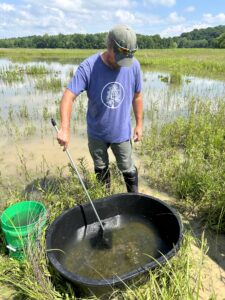
They partnered with Indiana DNR’s nongame aquatics team in September to survey freshwater mussels at several preserves along Beanblossom Creek in Monroe County. Because mussels are highly sensitive to pollution, erosion, and habitat disturbance, they can provide important information about aquatic ecosystem health. The team documented living individuals of 14 species of freshwater mussels across the surveyed preserves, along with evidence of reproduction for most species. One discovery was especially remarkable: a bed of 529 pistolgrip mussels, one of the largest documented populations of that species in Indiana. Finding a population of that size suggests that the stream has stable banks, clean water, and thriving populations of catfish, the host fish pistolgrips depend on for reproduction.
Healthy mussel communities point to healthy streams, and healthy streams are shaped by what is happening on the surrounding land. Forested streambanks, reduced erosion, intact floodplains, and careful land stewardship all contribute to the conditions mussels depend on.
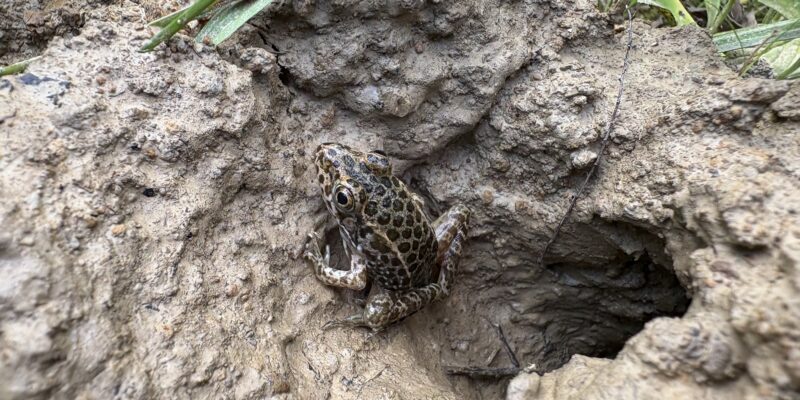
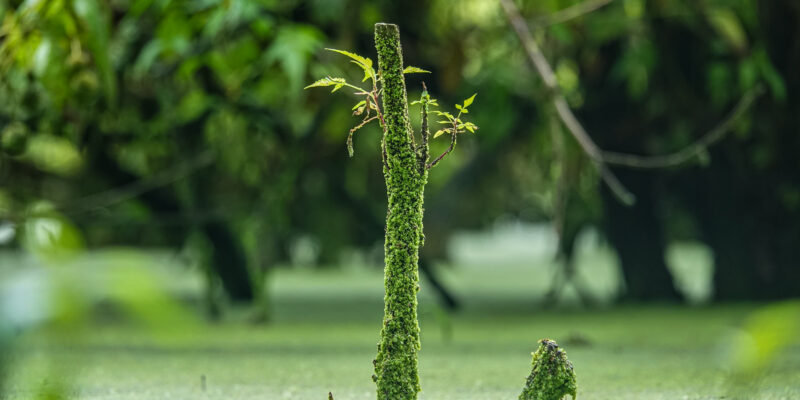
At the Sam Shine Foundation Preserve in Monroe County, Sycamore has been restoring wetlands and adjacent grasslands on former agricultural land, rebuilding habitats that have become increasingly rare across Indiana. That restoration work created an exciting opportunity in the summer of 2025, when Sycamore partnered with the Indiana DNR State Herpetology Program and Wildlife Health Program to support one of Indiana’s most imperiled amphibians: the state-endangered crawfish frog.
Crawfish frogs have very specific habitat needs. They breed in shallow seasonal wetlands but spend most of the year in nearby grasslands, sheltering underground in crayfish burrows. To support them, a landscape has to offer both breeding wetlands and open upland habitat close enough together for the frogs to complete their life cycle. At Shine, newly restored shallow wetlands now hold water seasonally, creating the temporary pools crawfish frogs need for breeding. Surrounding restored grasslands provide the open habitat and burrow-rich soils the species depends on after the breeding season.
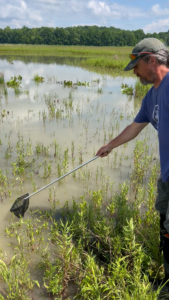
Indiana DNR partnered with Sycamore to release 606 crawfish frog metamorphs and 2,000 to 3,000 tadpoles into these restored wetlands in hopes of establishing a new population. Crawfish frogs take two to three years to reach maturity, so a sign of success will be hearing their snore-like mating call in the spring of 2027 or 2028, a sound that has not been heard along Beanblossom Creek for decades.
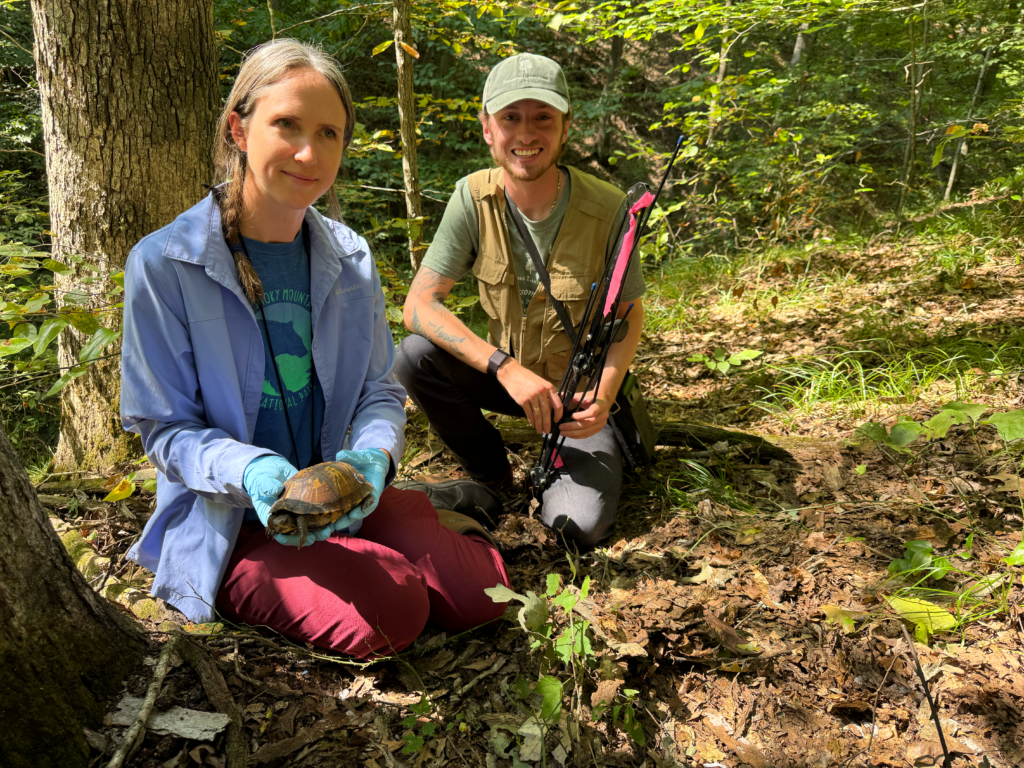
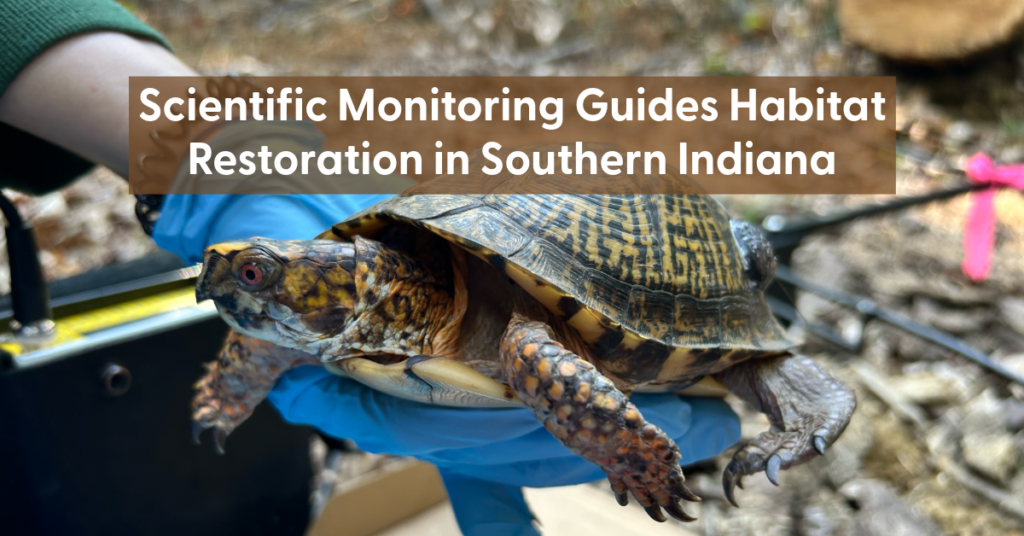
In 2025, Sycamore’s land stewardship team launched a pilot project using radio telemetry to monitor how eastern box turtles move across its preserves. Eastern box turtles are a species of special concern in Indiana, vulnerable to habitat fragmentation and roads. Because they are long-lived, slow to mature, and move relatively short distances, even small disruptions to their landscape can have lasting effects.
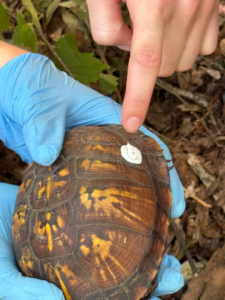
Four turtles affectionately nicknamed Dolly, Walden, Bonnie, and Clyde were fitted with harmless radio transmitters to track their movements and habitat preferences at Sycamore’s Laura Hare Nature Preserve at Downey Hill in Brown County. The tags were painted brown to help the turtles remain camouflaged. Each eastern box turtle has a unique shell pattern, almost like a thumbprint, which makes it possible to identify individuals quickly and release them with minimal handling.
The data collected is building the foundation for a long-term study that will help shape habitat management across Sycamore’s preserves and inform restoration work in ways that minimize impacts on native species.
Scientific research is helping Sycamore measure the ecological health of the preserves in its care and use that knowledge to guide the work ahead. The findings will help inform how land trusts across Indiana use stewardship tools like prescribed fire, invasive species removal, and native plantings to protect habitat, while gaining a better understanding of what these places need to remain healthy, resilient, and full of life.
 Sycamore Land Trust preserves the beauty, health, and diversity of southern Indiana’s natural landscape through strategic land conservation and environmental education.